  |
|
 HomePicturesTechnicalTournamentRecreationalFieldsStores HomePicturesTechnicalTournamentRecreationalFieldsStores |
|
|
Beginner InfoNews
And ArticlesLinksResourcesVideoContact
UsSearch |
| |
|
|
HomePicturesTechnicalTournamentRecreationalFieldsStores |
|
|
Beginner InfoNews
And ArticlesLinksResourcesVideoContact
UsSearch |
What do you think? Add your comments in WARPIG's TOURNEY TALK FORUM
|
Xball at World Cup 2002 By Bill Mills I had a somewhat unusual view of X Ball at the 2002 Paintball World Cup – the view from the announcer’s booth. Like some of the games at the 2002 Nation’s Cup, I filled the role of announcer and game commentator along with Craig Miller of ProCaps, Paul “PGP” Bollenbach captain of the Jax Warriors, and Avery Amaya captain of Texas Storm. World Cup this year had 3 X Ball tournaments in addition to the NPPL sanctioned 5 and 10 man competitions. The first and largest took place during the week – the X Ball College World Cup, with the X Ball pro and amateur games at the end of the week. Teams from the National Collegiate Paintball Association met on the X Ball field to battle it out during the 10 man pro, novice and rookie competitions at the main World Cup site.
In 1994, the first intercollegiate paintball tournament was held at Sherwood Forest paintball in Indiana. In the following years, successive intercollegiate tournaments led to the formation of the National Collegiate Paintball Association in August of 2000. The NCPA now coordinates communication and tournament organization between over 100 college paintball teams and clubs.
One of the other major features that makes X Ball different from traditional tournament paintball is the penalty system. Players pulled on penalties sit in the penalty box for a specified amount of time (depending on the infraction) and if the team comes back after a timeout, they play short until that player is released from the penalty box. A rule change after Nation’s Cup made the penalty rules similar to professional hockey – when a team had a score earned against them, a player was automatically released from penalty.
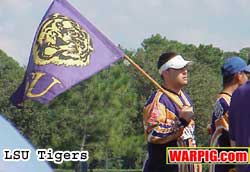
The first match GWU versus Penn State was pretty even. One team would take the lead, the game would tie, and then the other would take the lead. It ended with a score of 9 to 10, GWU winning by a single point. Not only was the match played without penalties, but players were high-fiving opponents who had bunkered them as they left for the dead box, and the two teams lined up to shake each other’s hands after the match. The sportsmanship and clean play was not isolated to these two teams – it was the standard of the tournament. While the NCPA has a long and growing history, hopefully the exposure it received by inclusion in the World Cup will bring stronger industry support to these college teams across the US. The second match was Illinois State against Louisiana State – most notable due to LSU’s enthusiasm. Before the game, and during halftime, members of their team wildly waved the LSU Tigers flag, and through out Mardi Gras beads to the crowd and announcers.
"It's good fun.
You get to see
By the time World Cup rolled around,
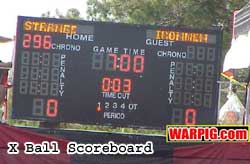
the scoreboard had a whole new interface, that was unseen by the public.
Designed by X Ball commissioner Mike Ratko, with software written by Chris
Black, the new scorekeeper’s controller was in the form of a program running
on a Windows based laptop computer. The control software featured
an image of the scoreboard, showing what it had on display, with point
and click operation. This meant that there were far fewer glitches
in displaying score information to the audience and teams than at Nation’s
Cup. Additionally radiolinked displays in the penalty boxes showed
penalty times remaining, and radiolinked displays in the staging areas
showed game time and timeout time remaining to the team coaches.
The computer control also adds the flexibility of displaying the scores
via video. It can be linked to a Jumbotron or similar large screen
video display, and or to monitors that would show the full scoreboard in
the team staging areas.
The first semifinals game was between the Drexel Dragons and the University of Illinois Illini. That match went to Drexel 8 to 3. The other semifinal match was played by LSU and Purdue. Regulation game time finished with a score of 4 to 4. This meant that the two teams would go into a sudden death overtime – the first time it had ever been done in an X Ball tournament. The flag was hung by Purdue, sending them on to face Drexel in the finals match. As soon as the Drexel/Purdue match was completed, workers started breaking down the scoreboard and preparing the DraXxus semi to move to the Disney Wide World of Sports complex, while the 10 man NPPL sanctioned pro, novice and rookie finals wrapped up.
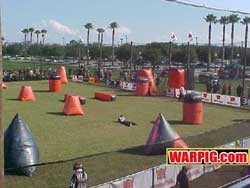
Sunday morning, the World Cup continued, on a new site with a single field. With all of the 5 and 10 man competitions out of the way, all that was left were X-Ball games. The Wide World of Sports is one of several theme parks and attractions that make up Walt Disney World, it’s neighbors being MGM Studios, the Magic Kingdom, EPCOT, and other parks. Wide World of Sports features food, sports memorabilia, and stadiums. Next to its parking lot, in a large expanse of well manicured grass is where the X Ball field was set up. Standard poles and netting surrounded the field on all sides with bleachers on the audience side, and the DraXxus trailer supporting the scoreboard and announcer’s booth on the other. Admission to watch the competition was free, and Disney did not charge for parking. The competition for pro and amateur teams was labeled as an exhibition, since no prizes were on the line. Teams were competing for bragging rights, exposure (the competition was videotaped by Adrenaline TV to air on their show) and trophies.
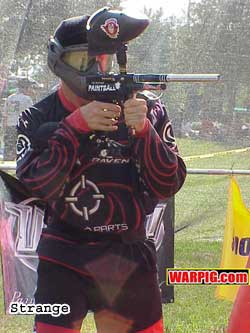
The first match up was part of the pro tournament – Baltimore Bad Company faced Miami Strange. In keeping with plans for the new National X Ball League – the NXL, teams were referred to along with the cities they will represent. The idea for the NXL teams is that they will be franchises, much like in the professional sports of baseball and football. The X Ball pro and amateur tournament was to be played in a single elimination format. Strange won that first match, knocking Bad Company out of the running. This was followed by New York Ground Zero versus the Los Angeles Ironmen. Ironmen took that match 7 to 5. "I think that
the exhibit was great. It was obvious to anyone pulling into the
parking lot tht this was something special. Netting was professionally
done, X Ball flags flying clearly showing what event it was. The
central field let everyone watch the action without missing anything.
The commentary really gave depth to the event, a good step towards the
future."
Ever since Bob Long split from the original Ironmen (which have since typically been called the Southern California Ironmen) and formed Bob Long’s Ironmen, there has been a dispute over who should rightfully use the name Ironmen. The NXL would only allow one team with the Ironmen name, so Bob Long chose to head up the San Francisco Intimidators, a team taking its aggressive name from his paintgun that has been gaining rapid acceptance amongst tournament players. The San Fransisco Intimidators tied with Chicago Aftershock at a score of 6 to 6 when the buzzer sounded at the end of the second half. This put the team into sudden death overtime. Richie Maliszewski broke through the center for Shock and made the hang, winning the match. The next match proved to be the most controversial. The Philadelphia All Americans faced San Diego Dynasty. These two teams were pretty evenly matched on the field, and after the last flag hang the score was 5 to 4. During the timeout, members of the All Americans began protesting very loudly to the referees, claiming that the scorekeeper had failed to record a previous point, and that the score should actually be five to five. A referee on field consulted with some of the other referees while being shouted at, and ordered the scorekeeper to add a point for the All Americans, tying the score at 5 to 5. Moments later protest erupted from Dynasty. Their group being led by Chuck Hendsch. The timout clock was ticking, and both teams ran to their start boxes with the issue unresolved. The All Americans scored a point, taking the score to 5 to 6. With a minute and a half on the clock for the last game, the match ended with no hang, and the scoreboard indicating a win for the All Americans by a single point. Dynasty further protested, and both teams asked to see video that the Adrenaline TV crews had been shooting, in the hopes that it could settle the dispute. Brian Barno, Head Referee from Philidelphia Eclipse hs e-mailed to clarify that he was not the referee who ordered the score change. According to Barno, he was unaware of the rules dispute until after the match was completed, and initially reviewed a game tape showing a score of 5 to 6 with two seconds remaining, and stood by that as the final score. He states that he later was given an opportunity to review tape further back in the match and determined that the correct and final score for the match should have been 5 to 5, not 5 to 6. Due to the tournament starting later than planned, and matches taking longer than expected the race to eight rule was changed to a race to six with seven minutes per half. The dispute continued off-field while the amateur tournament began. Carolina Trauma was bested by Chicago Farside with a score of four to two. Portland Naughty Dogs went up against Hollywood Warped Kids, and took them down 6 to zero in the first half. The Naughty Dogs ended up in a one on four situation but pulled through to get their winning point. The college finals match had not been played at this point, and members of the two finals teams were nearing the deadlines under which they would need to catch their return flights in order to be back in time for school and work. Mike Ratko calculated tie breaker information to determine a first place team, but the two teams chose instead to share the title in a display of sportsmanship that was indicative of how their tournament had run all week. Drexel and Purdue were jointly awarded the title of first place in the X Ball College World Cup.
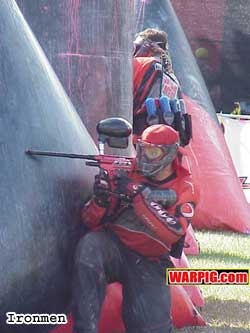
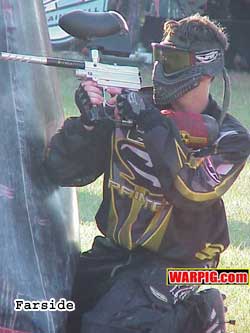
The Ironmen then faced Strange in a semifinal match, both teams playing conservatively. The match ended with Strange winning at a score of 4 to 3. The next scheduled match was between Aftershock and the All Americans – a semifinal. Shock’s Billy Ceranski walked on the field and threw a white towel, which is normally an X Ball move for a coach to stop the clock conceding a point to the opposing team. This towel was to concede the match. I made a phone call to Aftershock owner Renick Miller who confirmed the withdrawal. Miller said that Shock has won everything there is to win, and with no prizes on the line, they would rather withdraw and let the tournament progress straight to the finals rather than risk games running too late. “We fully support X Ball, and we want this tournament to succeed,” he said. The amateur finals match was played between the Naughty Dogs and Farside. Farside started out with the lead, but the Dogs caught up and overtook them. The 6 to three finish made Naughty Dogs the Amateur X Ball Champions. The last match of the day was Strange versus the All Americans, to decide the pro champion team. That match went to Strange with a score of five to one. The first X Ball World Cup tournaments
marked the end of the 2002 World Cup. With the NXL in the process
of forming, and plans for a national series of X Ball tournaments in 2003,
it also marked a new beginning.
|
| Copyright © 1992-2019
Corinthian Media Services. WARPIG's webmasters can be reached through our feedback form. All articles and images are copyrighted and may not be redistributed without the written permission of their original creators and Corinthian Media Services. The WARPIG paintball page is a collection of information and pointers to sources from around the internet and other locations. As such, Corinthian Media Services makes no claims to the trustworthiness or reliability of said information. The information contained in, and referenced by WARPIG, should not be used as a substitute for safety information from trained professionals in the paintball industry. |
 Earlier
in the summer, the X Ball Nations Cup used a double elimination tournament
format. The College X Ball World Cup was different. Like a
traditional paintball tournament, the teams started out in divisional prelims.
There were four divisions, and each team would have a match against the
other two in their division. The winners of the first two divisions
would play each other in a semifinal match. The winners of the third
and fourth divisions would play each other. The winners of the two
semifinal matches were scheduled to face each other in the finals match
on Sunday at the Disney Wide World of Sports complex.
Earlier
in the summer, the X Ball Nations Cup used a double elimination tournament
format. The College X Ball World Cup was different. Like a
traditional paintball tournament, the teams started out in divisional prelims.
There were four divisions, and each team would have a match against the
other two in their division. The winners of the first two divisions
would play each other in a semifinal match. The winners of the third
and fourth divisions would play each other. The winners of the two
semifinal matches were scheduled to face each other in the finals match
on Sunday at the Disney Wide World of Sports complex.
 Thursday,
October 24th, the first match of the X Ball World Cup was held between
George Washington University and Penn State. The remaining matches
were to be played on the following Friday and Saturday with the Finals
match on Sunday. An X Ball match consists of a series of games –
each ending with a point being scored, or the end of regulation game time
(or in rare circumstances the elimination of all players on the field.)
The original X-Ball format played in four quarters of 10 minutes each for
a total of 40 minutes regulation play. After Nations Cup it was decided
that this was too long, and it was changed to two 15 minute halves for
a total of 30 minutes regulation play. Each team plays with the goal
of capturing the central flag and running it across the field. Hanging
a flag scores a single point for that team, and puts the game into a three
minute timeout. No points are awarded for eliminated players, live
players, or “first pull” of the flag. The two game halves were separated
by a 10 minute halftime.
Thursday,
October 24th, the first match of the X Ball World Cup was held between
George Washington University and Penn State. The remaining matches
were to be played on the following Friday and Saturday with the Finals
match on Sunday. An X Ball match consists of a series of games –
each ending with a point being scored, or the end of regulation game time
(or in rare circumstances the elimination of all players on the field.)
The original X-Ball format played in four quarters of 10 minutes each for
a total of 40 minutes regulation play. After Nations Cup it was decided
that this was too long, and it was changed to two 15 minute halves for
a total of 30 minutes regulation play. Each team plays with the goal
of capturing the central flag and running it across the field. Hanging
a flag scores a single point for that team, and puts the game into a three
minute timeout. No points are awarded for eliminated players, live
players, or “first pull” of the flag. The two game halves were separated
by a 10 minute halftime.
 The
penalty box can create an exciting new dimension in the game – seeing games
go down with 2 players against 5 (as happened at Nation’s Cup) is amazing,
when the team that started with two players wins. When a player’s
penalty expires, and they are let loose onto the field mid-game it adds
another twist. Unfortunately, the NCPA teams played such clean, by
the rules paintball that in the first day of play there were no penalties
issued, and even by the end of their semifinals only about four penalties
had been called in total.
The
penalty box can create an exciting new dimension in the game – seeing games
go down with 2 players against 5 (as happened at Nation’s Cup) is amazing,
when the team that started with two players wins. When a player’s
penalty expires, and they are let loose onto the field mid-game it adds
another twist. Unfortunately, the NCPA teams played such clean, by
the rules paintball that in the first day of play there were no penalties
issued, and even by the end of their semifinals only about four penalties
had been called in total.
 In
the scoring booth, atop the DraXxus trailer, the scoring system had taken
on a whole new look since Nation’s Cup. The giant lightbulb scoreboard
that Procaps had purchased for X Ball was first set with a small control
box. The box had a small LCD text display and a few pushbuttons.
Procaps’ head of research and development, Chris Black operated the cumbersome
interface, but when it came to reading time remaining on penalties, and
the like, he had to radio the referees and ask. This is because in
most sports the scorekeeper is seated in a place where he or she can see
the scoreboard. Similarly, the hand held chronographs used on the
field automatically beamed their readings by radio up to the scoreboard,
which was not visible from the booth.
In
the scoring booth, atop the DraXxus trailer, the scoring system had taken
on a whole new look since Nation’s Cup. The giant lightbulb scoreboard
that Procaps had purchased for X Ball was first set with a small control
box. The box had a small LCD text display and a few pushbuttons.
Procaps’ head of research and development, Chris Black operated the cumbersome
interface, but when it came to reading time remaining on penalties, and
the like, he had to radio the referees and ask. This is because in
most sports the scorekeeper is seated in a place where he or she can see
the scoreboard. Similarly, the hand held chronographs used on the
field automatically beamed their readings by radio up to the scoreboard,
which was not visible from the booth.

 Due
to the number of matches planned for the day, shorter times and special
rules were put in place. The match halves were shortened to 10 minutes
each with a five minute half time. While this was necessary to get
in the planned games, it proved to be antithetical to the idea of X-Ball
which was to develop paintball into a longer game more suited to the time
format of a television sportscast. Additionally a “race to eight”
rule was instituted. If a team earned eight points, they would win
the match, regardless of time on the clock.
Due
to the number of matches planned for the day, shorter times and special
rules were put in place. The match halves were shortened to 10 minutes
each with a five minute half time. While this was necessary to get
in the planned games, it proved to be antithetical to the idea of X-Ball
which was to develop paintball into a longer game more suited to the time
format of a television sportscast. Additionally a “race to eight”
rule was instituted. If a team earned eight points, they would win
the match, regardless of time on the clock.
 In
the meantime Dynasty and the All Americans agreed to play a sudden death
game to determine which of them would move on. This is the same thing
that would have happened if the sixth point had not been added to the All
American’s score on the scoreboard. With a 5 to 5 tie both teams
would have been in a sudden death overtime. The All Americans got
the hang, winning the match to advance.
In
the meantime Dynasty and the All Americans agreed to play a sudden death
game to determine which of them would move on. This is the same thing
that would have happened if the sixth point had not been added to the All
American’s score on the scoreboard. With a 5 to 5 tie both teams
would have been in a sudden death overtime. The All Americans got
the hang, winning the match to advance.